Some of the easiest interviews I have run were with candidates who turned out to be wrong for the job.
They were warm, confident and quick. We laughed. Within minutes I had decided, and I spent the rest of the hour confirming it.
Charm is useful in this job. Doctors respond to it. But it is not the same as planning a territory, going back to a doctor who said no, or staying honest when the month is tight.
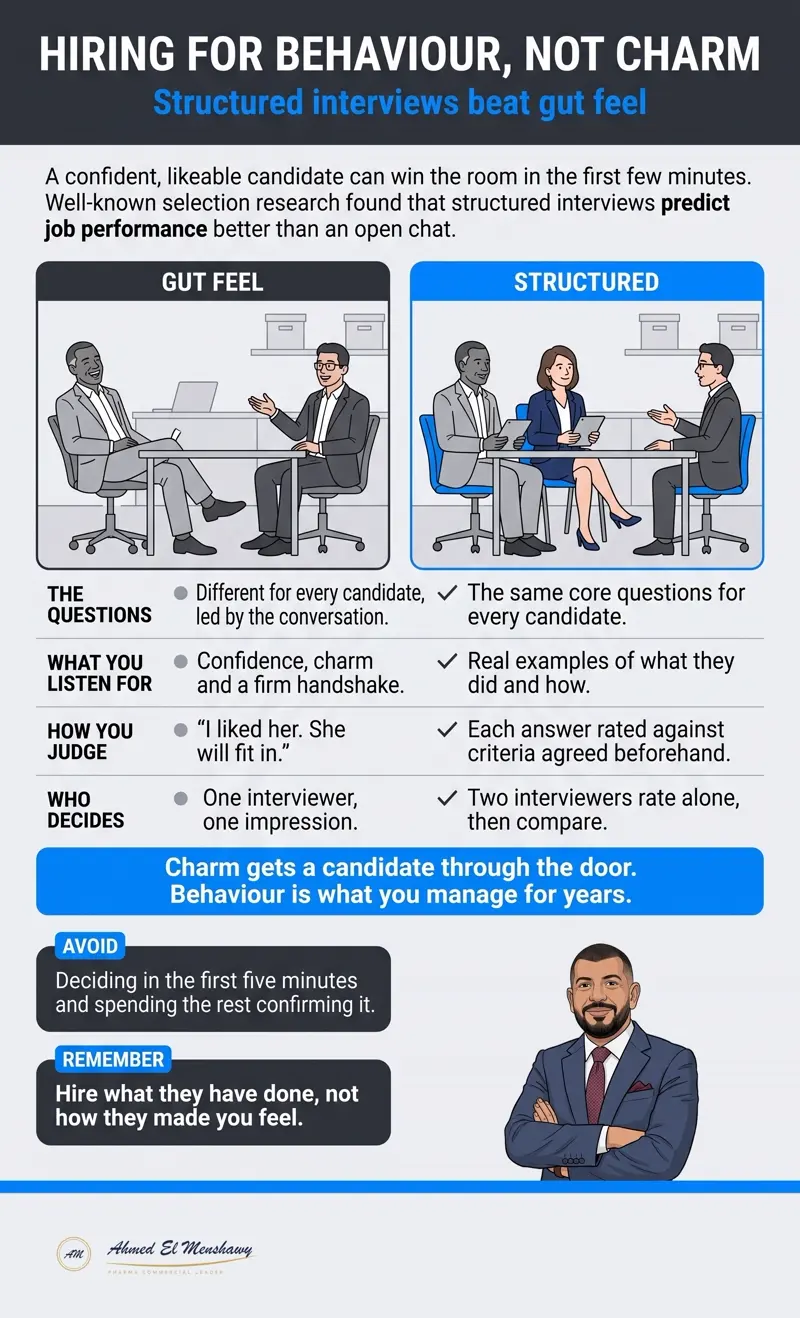
Research on selection, most often cited from Schmidt and Hunter, has long found that structured interviews predict job performance better than unstructured ones.
In practice, structure for me means four things:
- The same core questions for every candidate, so I compare like with like.
- Asking for real examples of what they did, not what they would do.
- Rating each answer against criteria we agreed before the interview.
- Two interviewers who rate alone first, then compare.
It feels less natural at the start. Candidates who are strong on substance but quiet on charm finally get a fair hearing. And the charming ones still do well when the charm is backed by real examples.
The rep I hire is someone I will manage for years. I would rather judge the behaviour than the first impression.
“Hire what they have done, not how they made you feel.”
Lesson 1 of 12 in Step 7: Hiring and onboarding, with the full guide and a checklist for this week.