Almost every incentive scheme is launched with good intentions.
Some of them quietly teach the team the wrong job.
Steven Kerr wrote about this in a well-known article, "On the folly of rewarding A, while hoping for B". The idea is simple. People do what they are paid for, not what we hoped they would do.
In a field team it looks like this.
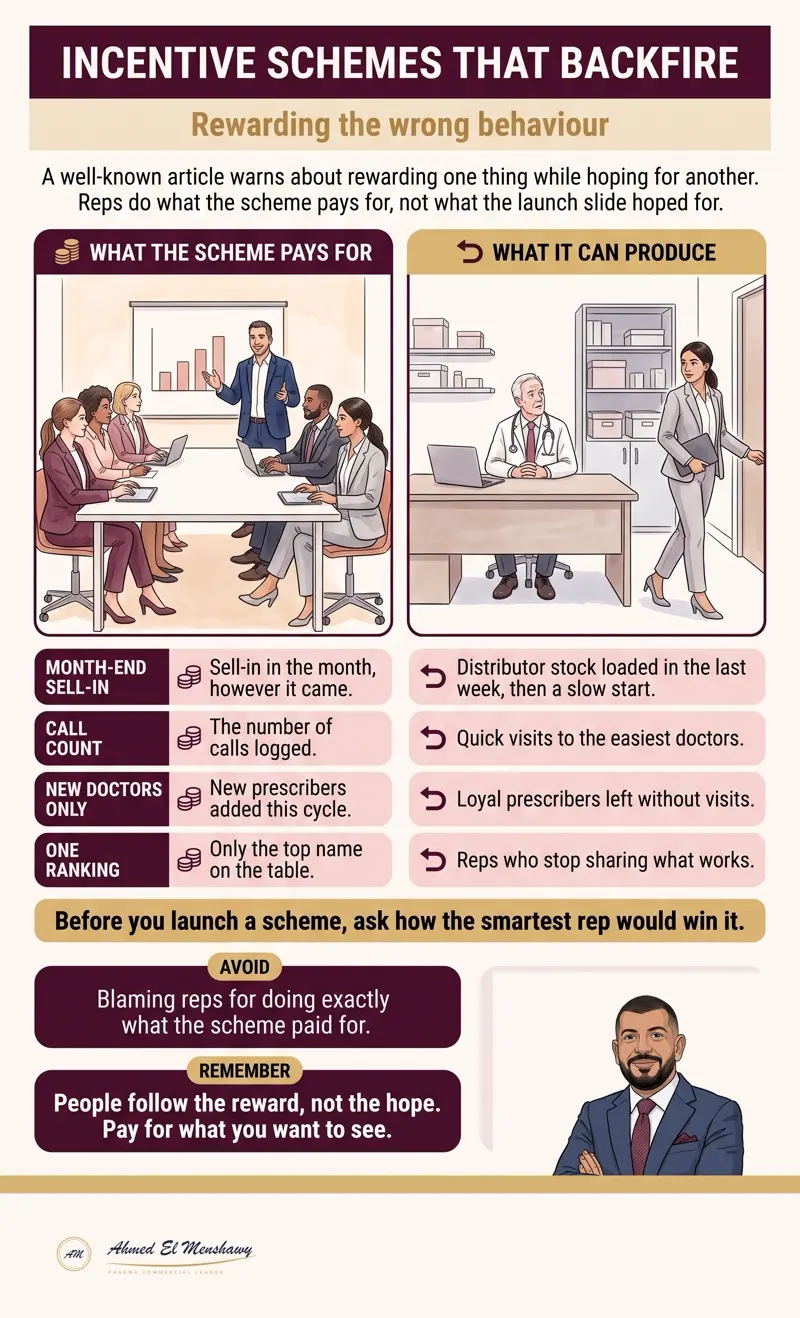
Pay for month-end sell-in, and you may get distributor stock loaded in the last week, then a slow start to the next month.
Pay for the number of calls, and you may get quick visits to the easiest doctors.
Pay only for new prescribers, and the loyal ones can go without visits.
Pay only the top name on the ranking, and reps stop sharing what works.
None of this makes the reps bad people. They read the scheme correctly. The design was the problem.
So before a scheme goes live, I ask one question: how would the smartest rep in the team win this? If the honest answer is not the behaviour I want, the scheme needs changing, not the reps.
“People follow the reward, not the hope. Pay for what you want to see.”
Lesson 6 of 6 in Step 6: Managing performance, with the full guide and a checklist for this week.