Most leadership teams I have worked with say they want more accountability.
Fewer ask whether the team trusts each other enough to deliver it.
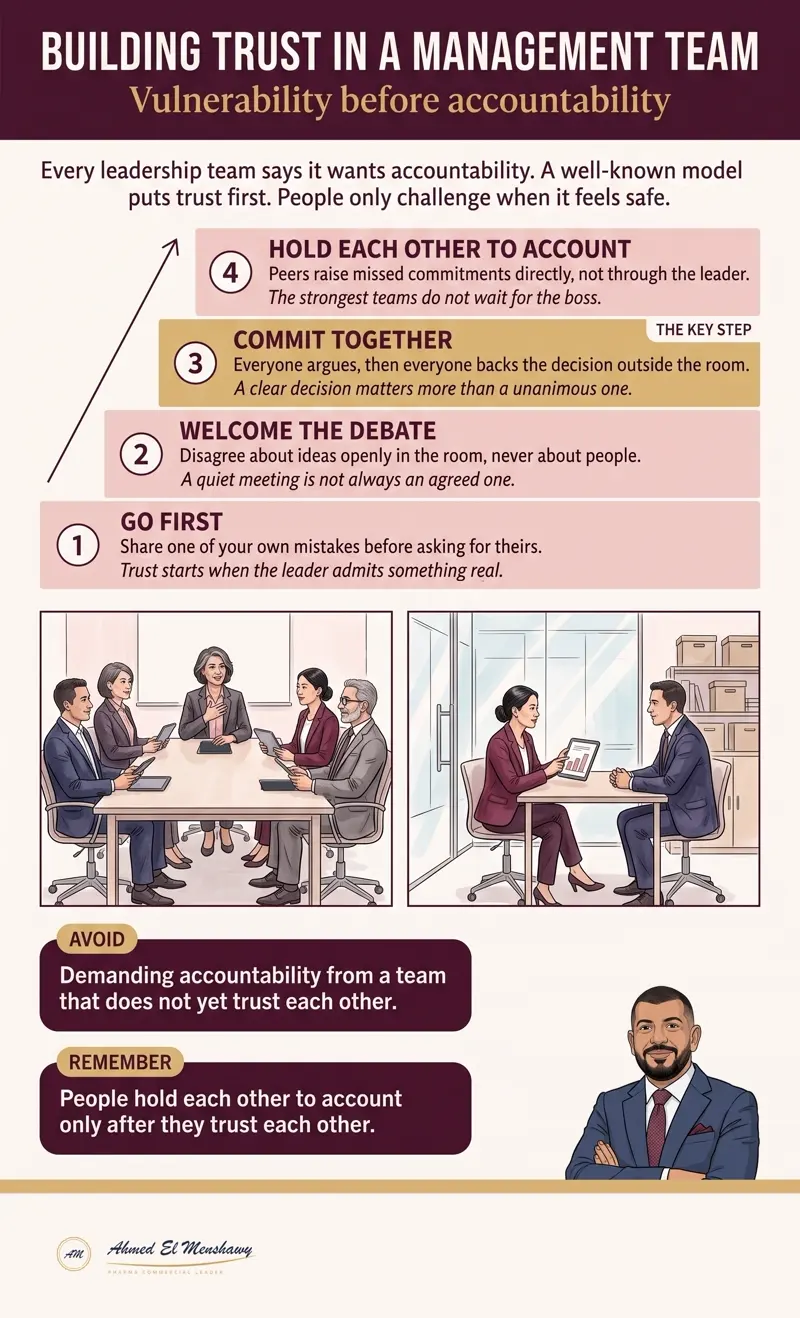
Lencioni's model puts trust at the base, and accountability near the top. In my experience, the order matters. People do not challenge a peer's missed commitment unless they feel safe doing it. Without trust, accountability flows only one way: up to the leader, and back down as pressure.
What I try to build, in this order:
Go first. Share one of your own mistakes before asking the team for theirs. Trust starts when the leader admits something real.
Welcome the debate. Disagree about ideas, openly and in the room. Never about people. A quiet meeting is not always an agreed one.
Commit together. Everyone argues, then everyone backs the decision outside the room. A clear decision matters more than a unanimous one.
Hold each other to account. The finance manager raises it with marketing directly. Marketing raises it with sales. Nobody waits for the country manager to say it.
The mistake is starting at the top: demanding accountability from a team that does not yet trust each other. It produces blame, not results.
“People hold each other to account only after they trust each other.”
Lesson 4 of 15 in Step 7: Leading the leadership team, with the full guide and a checklist for this week.