Most annual plans I have seen start in the same place.
Last year's sales, a growth figure from headquarters, and a budget split in proportion.
That is a forecast. It is not a strategy.
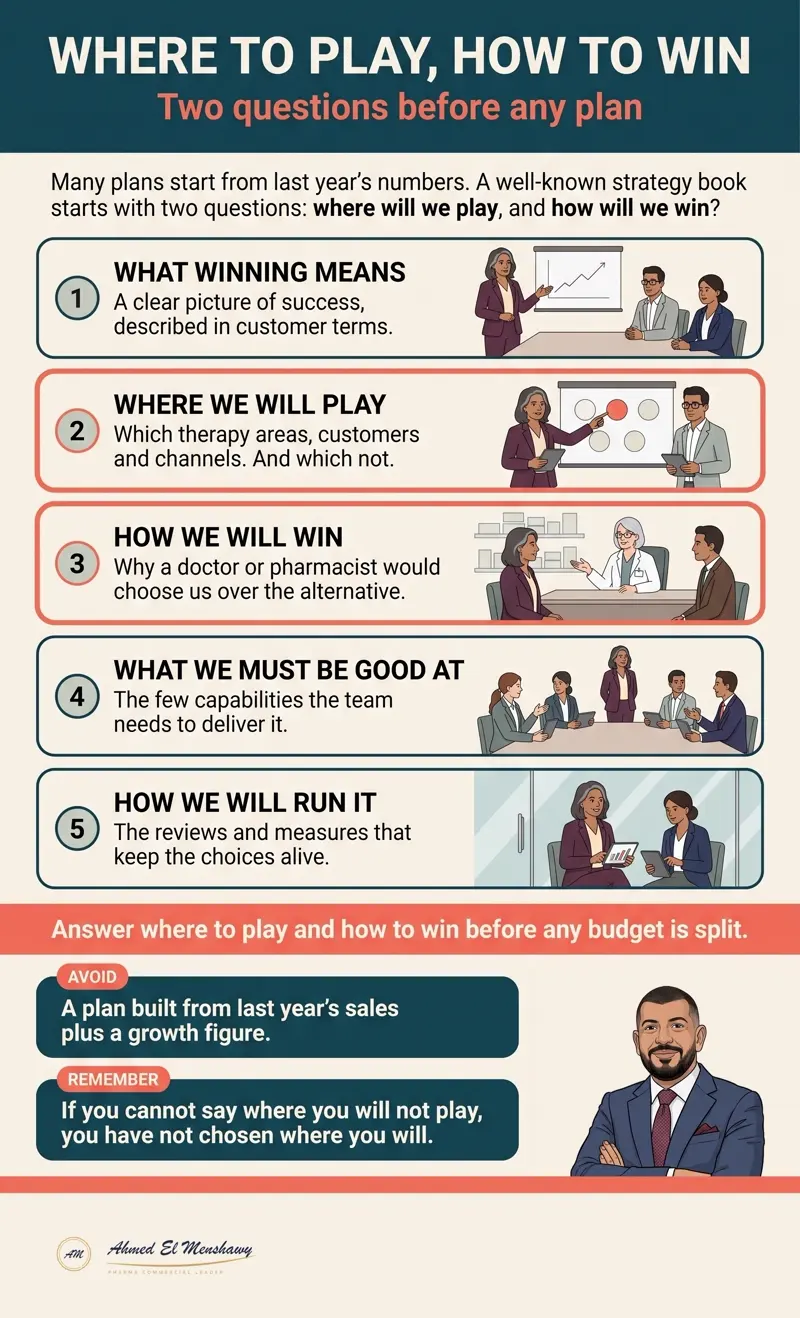
Lafley and Martin's Playing to Win describes strategy as a set of linked choices. The two in the middle are the ones I now ask before any number goes on a slide.
- Where will we play?
- Which therapy areas, which customers, which channels. And, just as clearly, which not.
- How will we win there?
- Why would a doctor, a pharmacist or a hospital choose us over the alternative they already use?
If the team cannot answer the second question in plain words, the plan is hoping, not choosing.
The other three choices keep it honest. What does winning actually look like in this market? What must the team be good at to deliver it? Which reviews and measures keep those choices alive after the kick-off meeting?
In my teams, this conversation usually takes longer than the budget itself. It saves time later, because every argument about resources goes back to the same two answers.
“If you cannot say where you will not play, you have not chosen where you will.”
Lesson 2 of 16 in Step 1: Setting strategy, with the full guide and a checklist for this week.