Most distributor problems do not arrive suddenly.
They arrive quietly, in numbers that were there all along. Stock creeping up. Deliveries arriving late. A promise from last month that nobody followed up.
In my experience, the difference is not the distributor. It is whether anyone reads those numbers together, every month.
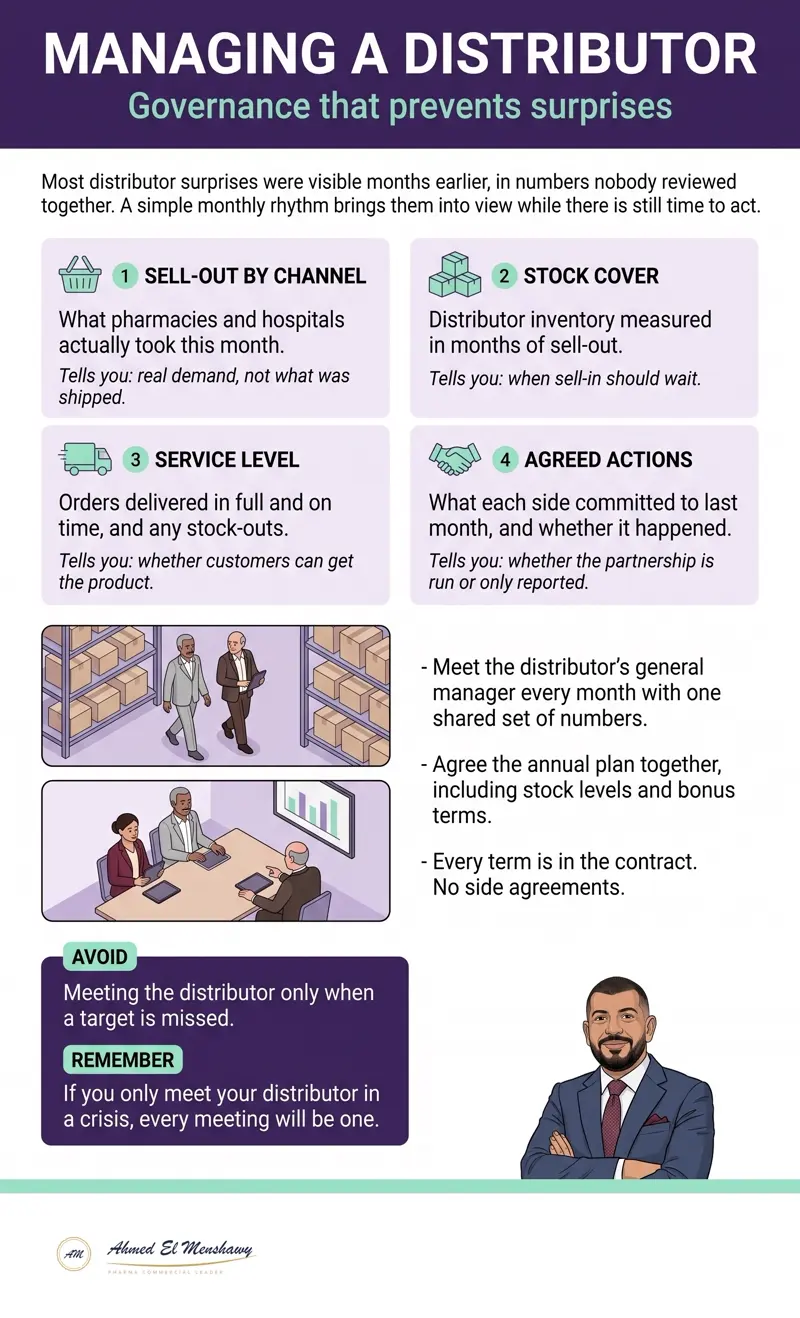
These are the four I bring to the table.
Sell-out by channel. What pharmacies and hospitals actually took. Real demand, not shipments.
Stock cover. Distributor inventory in months of sell-out. When it rises, sell-in should wait.
Service level. Orders delivered in full and on time, and any stock-outs. If customers cannot get the product, nothing else matters.
Agreed actions. What each side committed to last month, and whether it happened.
The rhythm is simple. One meeting a month with the distributor's general manager, one shared set of numbers, one list of actions. The annual plan is agreed together, including stock levels and bonus terms. And every term sits in the contract. No side agreements, ever.
A distributor is a partner you run with, not a supplier you chase at month end.
“If you only meet your distributor in a crisis, every meeting will be one.”
Lesson 2 of 17 in Step 4: Distributors and market access, with the full guide and a checklist for this week.