When a team goes flat, the first idea in the room is usually a bigger incentive.
I understand why. It is quick, it is visible, and it feels generous. In my experience the effect rarely outlasts the quarter.
Two ideas shape how I think about it.
Herzberg put pay among the things that prevent dissatisfaction, not the things that create drive. And Daniel Pink's Drive makes a simple point: pay people fairly, then take money off the table so they can focus on the work.
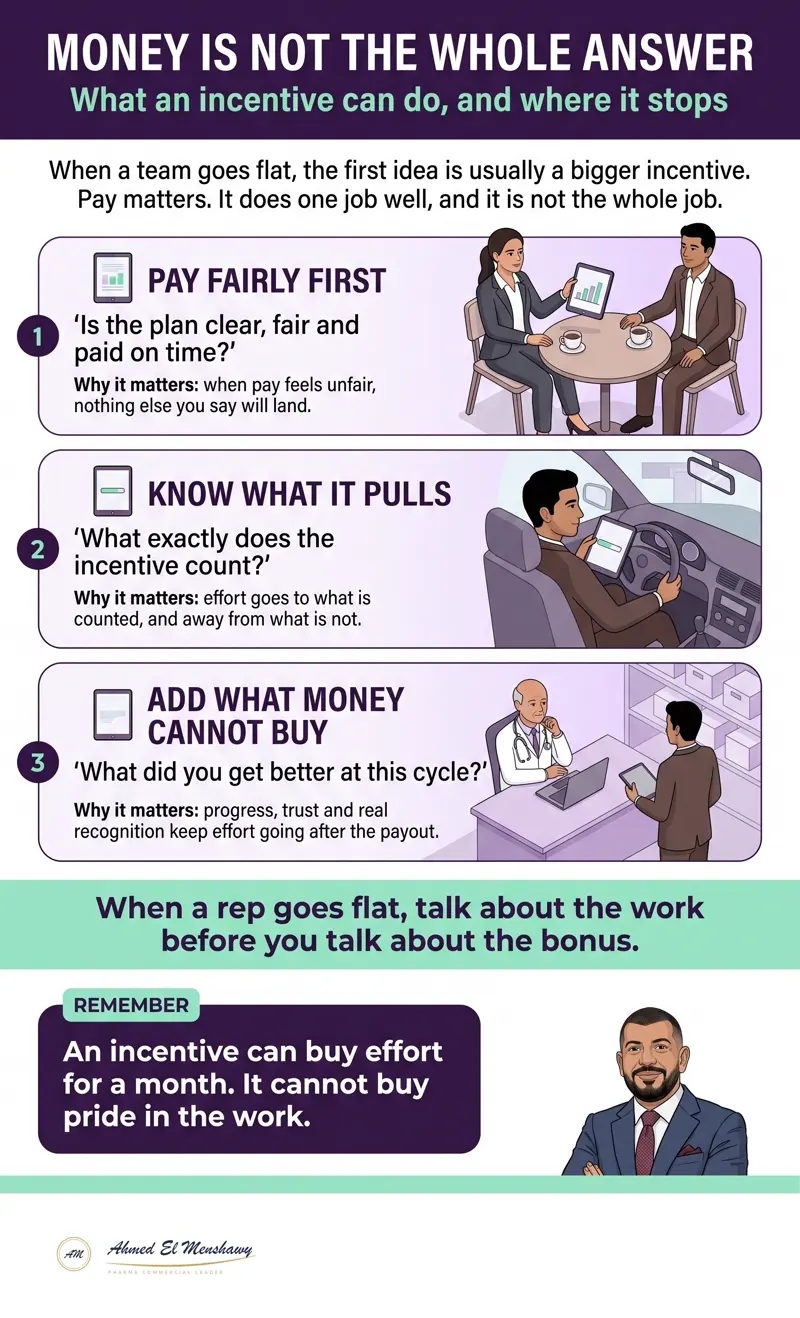
So I ask three questions, in this order.
- Is the plan clear, fair and paid on time?
- If pay feels unfair, nothing else I say will land.
- What exactly does it count?
- Effort goes to what is counted. A plan paid only on sell-in, for example, can quietly reward month-end stock pushing instead of real demand.
- What does the rep get that money cannot buy?
- A skill they are proud of. A doctor they won over. Recognition that is specific. More say in how they run their territory.
Money gets attention. The work itself keeps the effort going.
“An incentive can buy effort for a month. It cannot buy pride in the work.”
Lesson 3 of 19 in Step 5: Motivating and building the team, with the full guide and a checklist for this week.