Most managers I know can open a difficult conversation. Fewer can stay in one.
The rep goes silent. Or pushes back hard. Or gets upset. And the manager, with the best intentions, softens everything until the point disappears. Both leave relieved. Nothing changes.
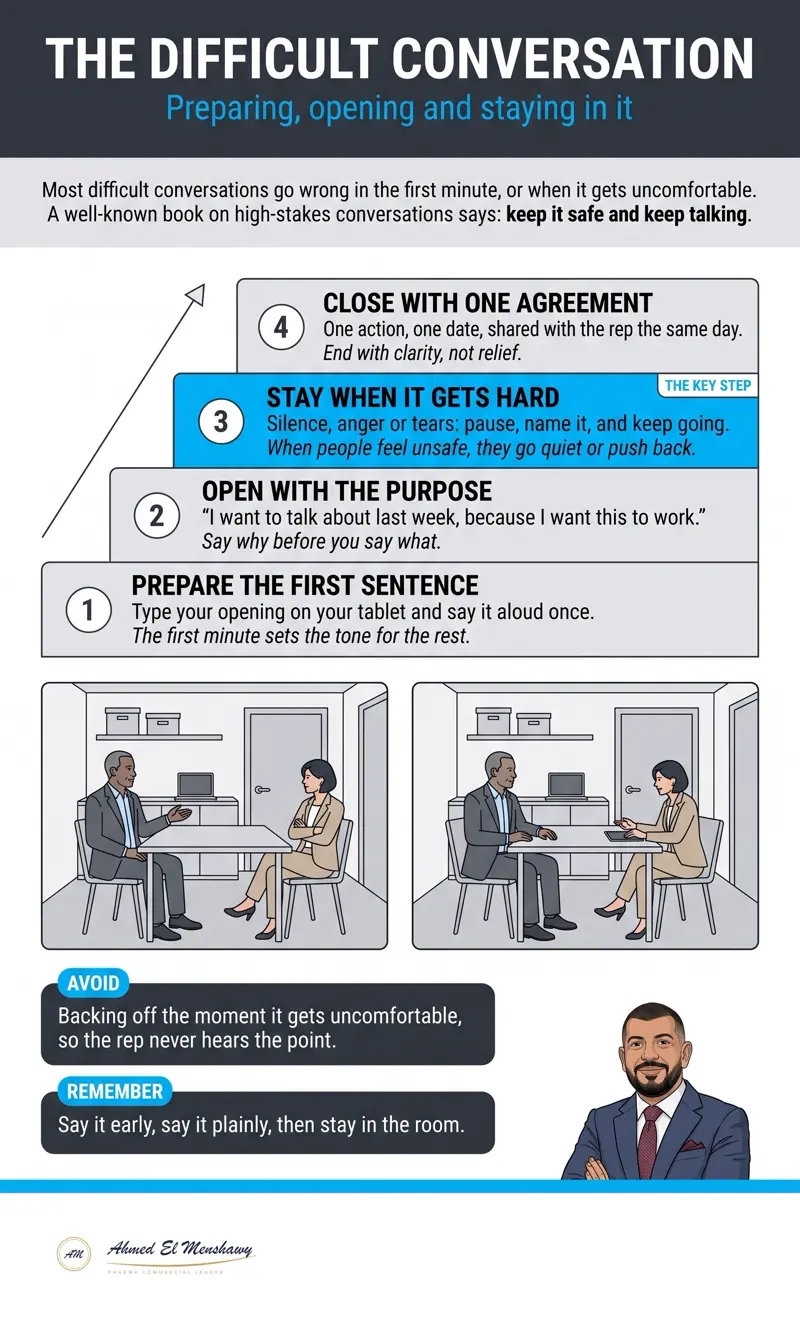
Patterson and colleagues describe this well: when people stop feeling safe, they go quiet or push back. The job is to make it safe again, not to retreat.
How I prepare and run these now:
Prepare the first sentence. I type it on my tablet and say it aloud once. The first minute sets the tone for the rest.
Open with the purpose. "I want to talk about last week, because I want this to work." Why before what.
Stay when it gets hard. If there is silence, I wait. If there is anger or tears, I pause, name it gently, and keep going. "I can see this is hard to hear. I still think we need to talk about it."
Close with one agreement. One action, one date, shared with the rep the same day. The conversation should end with clarity, not just relief.
Always in private. Never in the car park between calls.
“Say it early, say it plainly, then stay in the room.”
Lesson 16 of 19 in Step 5: Motivating and building the team, with the full guide and a checklist for this week.