When a rep is unhappy, most managers reach for the same fixes. Samples on time. Expenses paid faster. A CRM that works.
All of those matter. None of them will make a rep want to do more.
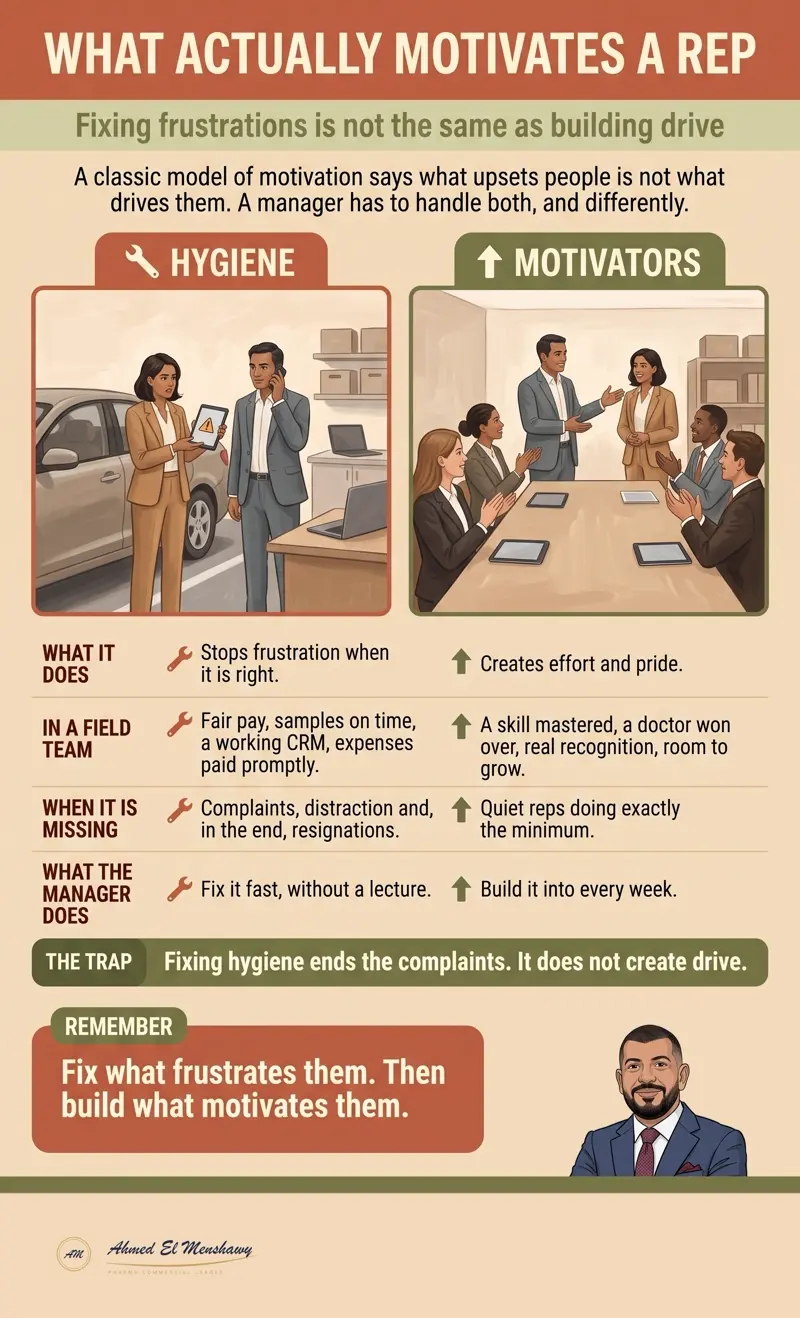
Herzberg's two-factor theory splits work into two lists, and I find it one of the most useful models for a field team.
- Hygiene factors stop people being unhappy.
- In a field team: fair pay, samples on time, a working CRM, expenses paid promptly. When they are missing, you get complaints, distraction and, in the end, resignations.
- Motivators make people want to do more.
- A skill mastered. A difficult doctor won over. Recognition that is specific. Room to grow. When they are missing, you do not get complaints. You get quiet reps doing exactly the minimum.
That second group is the one that fools managers. Nobody is complaining, so everything looks fine.
My rule: fix hygiene fast and without a lecture. Then build motivators into every week, because they do not arrive by themselves.
“Fix what frustrates them. Then build what motivates them.”
Lesson 2 of 19 in Step 5: Motivating and building the team, with the full guide and a checklist for this week.