Some quarterly reviews are prepared the night before.
You can usually tell. The slides are polished, the story is defensive, and the first hard question from the room exposes a gap nobody talked about with the team.
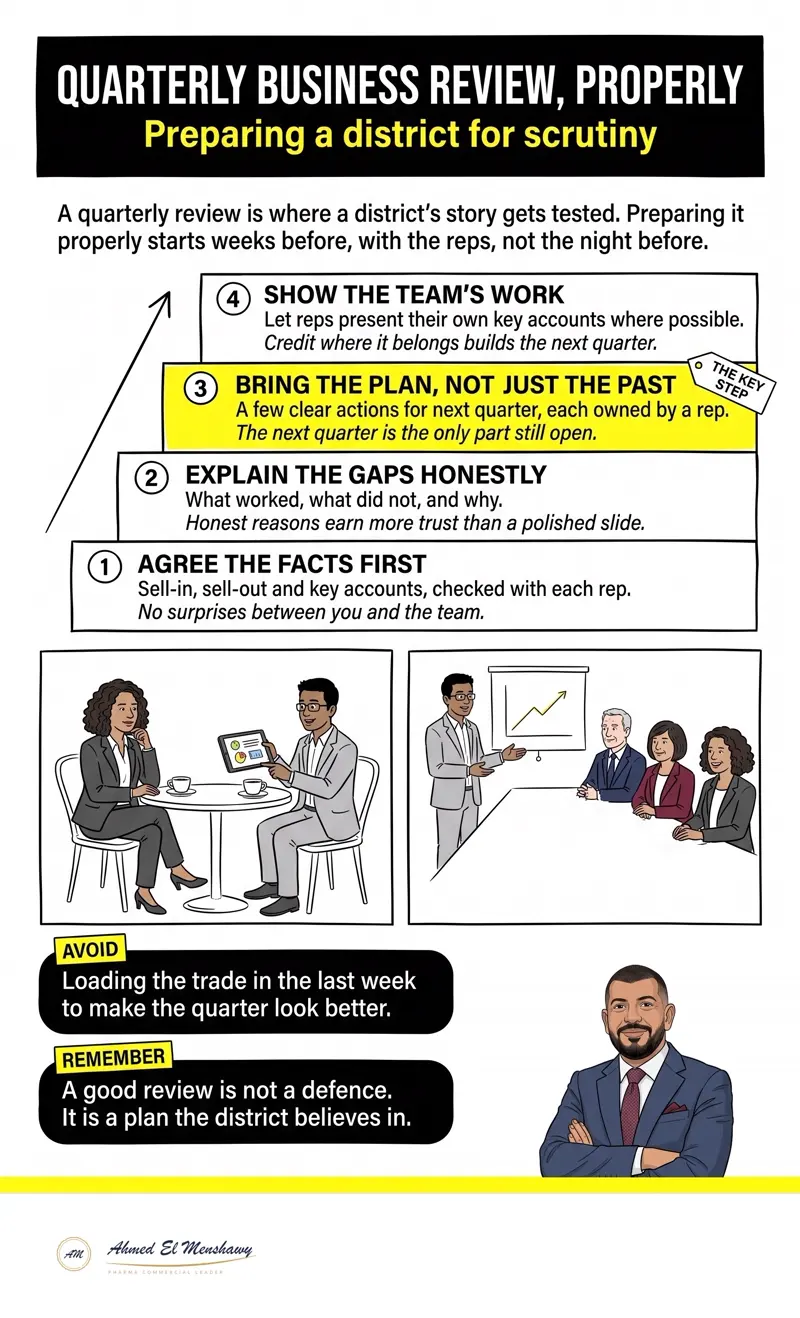
A quarterly review is where a district's story gets tested. In my experience, a good one is built weeks earlier, with the reps, in four steps.
Agree the facts first. Sell-in, sell-out and the key accounts, checked with each rep. No surprises between me and the team.
Explain the gaps honestly. What worked, what did not, and why. Honest reasons earn more trust than a polished slide.
Bring the plan, not just the past. A few clear actions for next quarter, each owned by a rep. This is the step that matters most, because the next quarter is the only part still open.
Show the team's work. Where possible, reps present their own key accounts. Leaders learn more from the person who does the calls, and the rep feels the credit is theirs.
One thing I never do: load the trade in the last week to make the quarter look better. The review should show the district as it is.
“A good review is not a defence. It is a plan the district believes in.”
Lesson 10 of 13 in Step 2: Targets, forecasts and numbers, with the full guide and a checklist for this week.