Most first-line managers do not set the area target. It arrives from above.
But we do decide how to split it across the team. And that split decides whether each rep believes their number or quietly gives up on it in the first month.
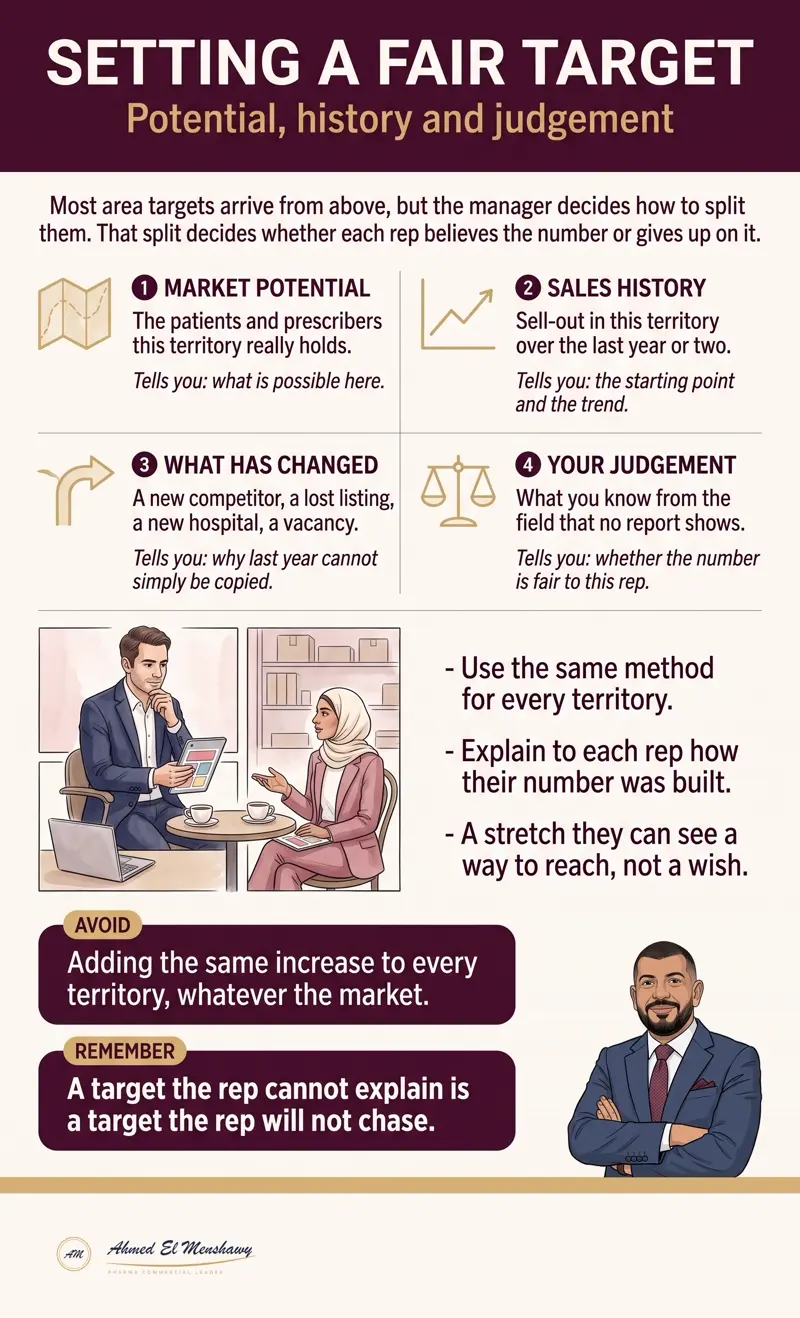
The easy way is to add the same increase to every territory. It feels fair because it is equal. It rarely is fair, because no two territories are the same.
What I look at instead:
Market potential. The patients and prescribers this territory really holds. That is what is possible.
Sales history. Sell-out in this territory over the last year or two. That is the starting point and the trend.
What has changed. A new competitor, a lost listing, a new hospital, a vacancy that was not covered. That is why last year cannot simply be copied.
My own judgement. What I know from the field that no report shows.
Then two rules. The same method for every territory. And every rep hears how their number was built, not just what it is.
A good target is a stretch the rep can see a way to reach. A number with no logic behind it is only a wish.
“A target the rep cannot explain is a target the rep will not chase.”
Lesson 1 of 13 in Step 2: Targets, forecasts and numbers, with the full guide and a checklist for this week.