When a good rep resigns, the budget line can look better for a few months.
One salary fewer. Nothing seems to break.
In my experience, the cost is real. It just lands in places the payroll line does not show.
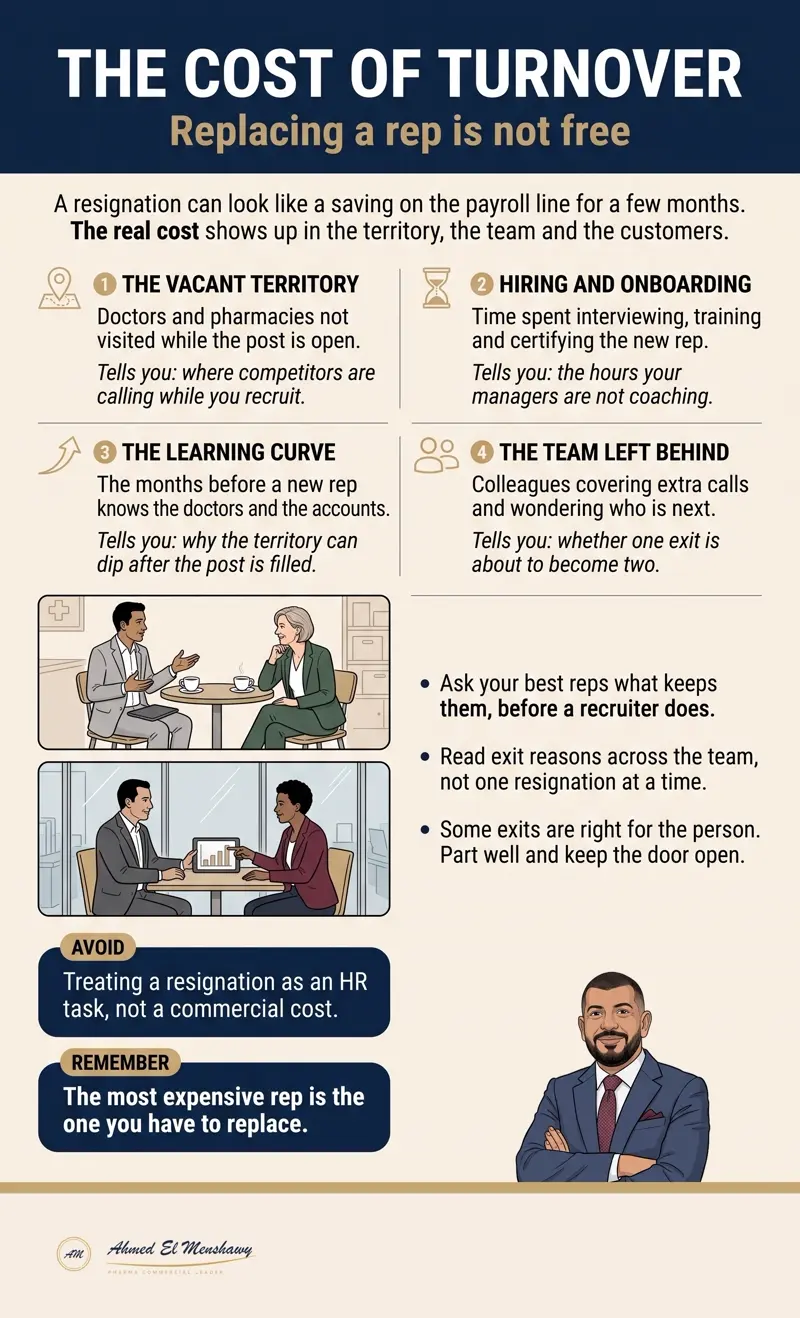
The vacant territory. Doctors and pharmacies nobody visits while you recruit. Competitors do not wait for your hiring process.
Hiring and onboarding. Interviews, training, certification. Every one of those hours comes out of a manager's coaching time.
The learning curve. A new rep needs months to know the doctors, the accounts and the rhythm of the territory. The number can dip even after the post is filled.
The team left behind. Colleagues cover the extra calls, and quietly ask themselves whether they should be next.
So I treat retention as a commercial topic, not only an HR one.
- Ask your best reps what keeps them, before a recruiter does.
- Read exit reasons across the team, not one resignation at a time.
- And accept that some exits are right for the person. Part well. People come back more often than we expect.
“The most expensive rep is the one you have to replace.”
Lesson 12 of 17 in Step 5: Building the organisation, with the full guide and a checklist for this week.