Most organisation charts I have inherited were drawn for a plan that no longer existed.
The brands had changed. The customers had changed. The team had not.
So a hospital brand was being sold by a team built for retail calls. Tenders were handled by whoever had a spare afternoon. And everyone wondered why the plan was slipping.
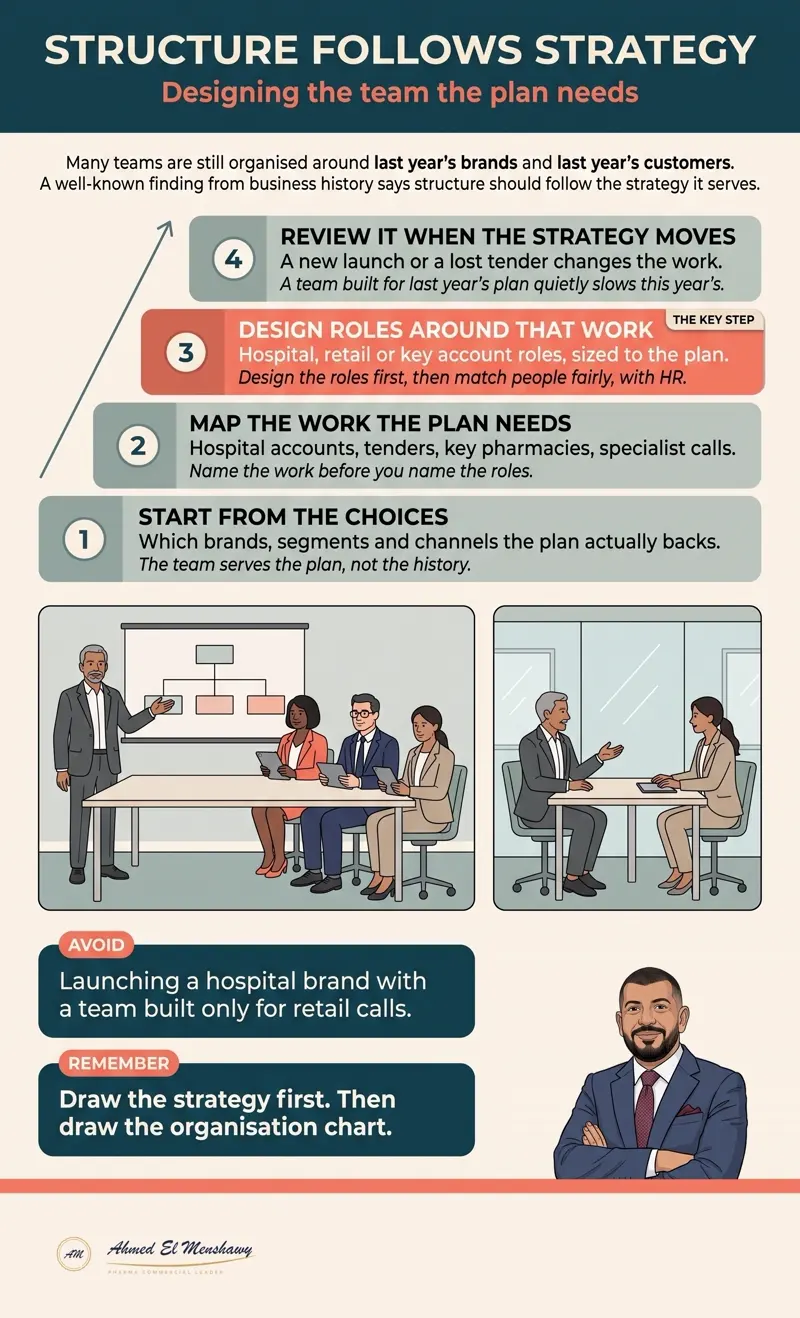
Alfred Chandler studied large companies decades ago and found that structure follows strategy. When the strategy changes, the structure has to change with it. I have found it is usually the other way round in practice: we keep the structure and quietly bend the strategy to fit.
What I try to do instead:
- Start from the choices. Which brands, segments and channels the plan actually backs.
- Map the work those choices create. Hospital accounts, tenders, key pharmacies, specialist calls.
- Design the roles around that work. Then match people to them fairly, with HR, and explain every change to the people it touches.
- Review it whenever the strategy moves. A new launch or a lost tender changes the work.
Restructuring is never comfortable, and it should never be done carelessly. But a team built for last year's plan will quietly slow this year's, however hard people work.
“Draw the strategy first. Then draw the organisation chart.”
Lesson 1 of 17 in Step 5: Building the organisation, with the full guide and a checklist for this week.