A country can hit its sales number and still be in trouble.
The team is tired. Two managers are about to leave. A formulary listing is at risk. The forecast has been wrong for months. None of it shows in this quarter's sales.
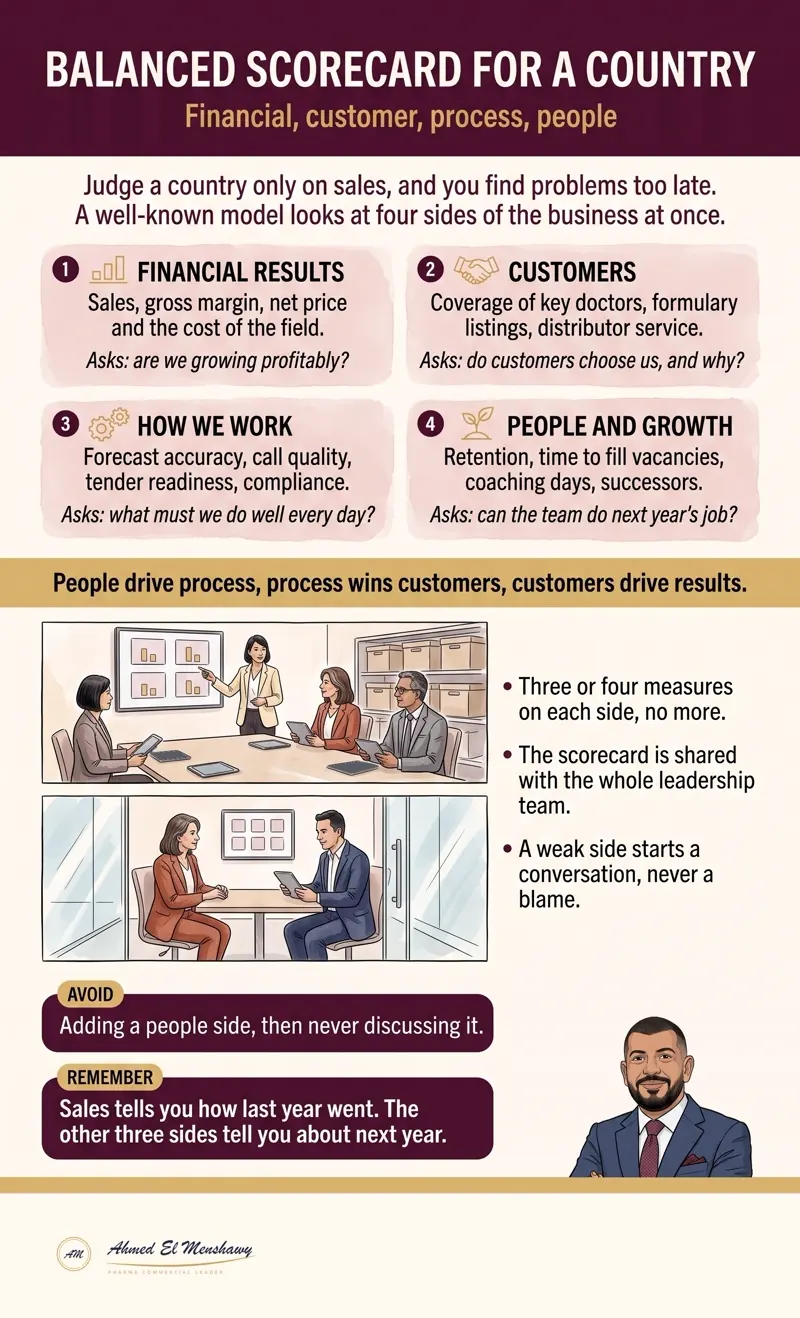
This is why I like the balanced scorecard. Kaplan and Norton built it on a simple idea: look at four sides of the business at once, not one.
For a country, in my teams, that means:
Financial results. Sales, gross margin, net price, the cost of the field.
Customers. Coverage of key doctors, formulary listings, how well distributors are served.
How we work. Forecast accuracy, call quality, tender readiness, compliance.
People and growth. Retention, time to fill vacancies, coaching, successors for key roles.
The sides are linked. People drive the way we work. The way we work wins customers. Customers drive the results.
Three rules keep it useful. Three or four measures per side, no more. Share it with the whole leadership team. And when one side looks weak, start a conversation, not a blame.
The most common mistake I see is adding a people side to the scorecard and then never discussing it.
“Sales tells you how last year went. The other three sides tell you about next year.”
Lesson 4 of 10 in Step 8: Execution and the operating rhythm, with the full guide and a checklist for this week.