Some country managers are busy every day and still feel the business is running them.
In my experience, the cause is rarely effort. It is the calendar.
When nothing is fixed in advance, the year gets shaped by whoever asks loudest this week. A request from the region, an urgent review, a meeting that moves the field days again.
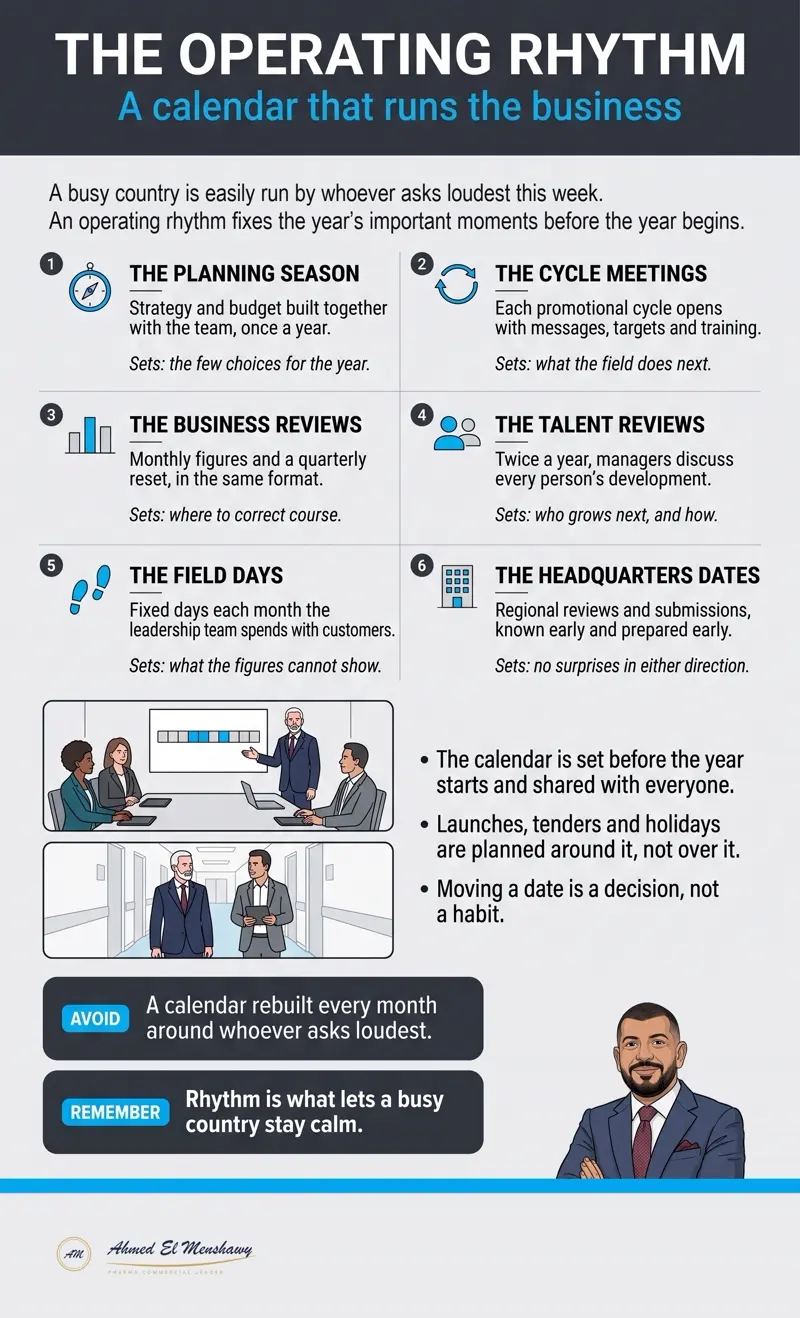
An operating rhythm fixes the important moments before the year begins:
The planning season. Strategy and budget built together, with the team.
The cycle meetings. Each promotional cycle opens with messages, targets and training.
The business reviews. Monthly figures, a quarterly reset, the same format every time.
The talent reviews. Managers discuss every person's development, and each person hears the outcome.
The field days. Fixed days when the leadership team is with customers, not in meetings.
The headquarters dates. Known early, prepared early, no surprises either way.
Then the calendar is shared with everyone. Launches, tenders and holidays are planned around it, not over it. And moving a date becomes a decision, not a habit.
The effect is quieter than you would expect. Fewer urgent meetings. Managers who know when they will be asked what. More time in the field.
“Rhythm is what lets a busy country stay calm.”
Lesson 3 of 10 in Step 8: Execution and the operating rhythm, with the full guide and a checklist for this week.