A bad quarter rarely arrives as a surprise.
It usually sends signals in the first few weeks. We just tend to read them late, because the monthly sales number still looks fine.
A well-known idea from the Balanced Scorecard helps here: results are lagging indicators. They tell you what already happened. Leading indicators tell you what is coming.
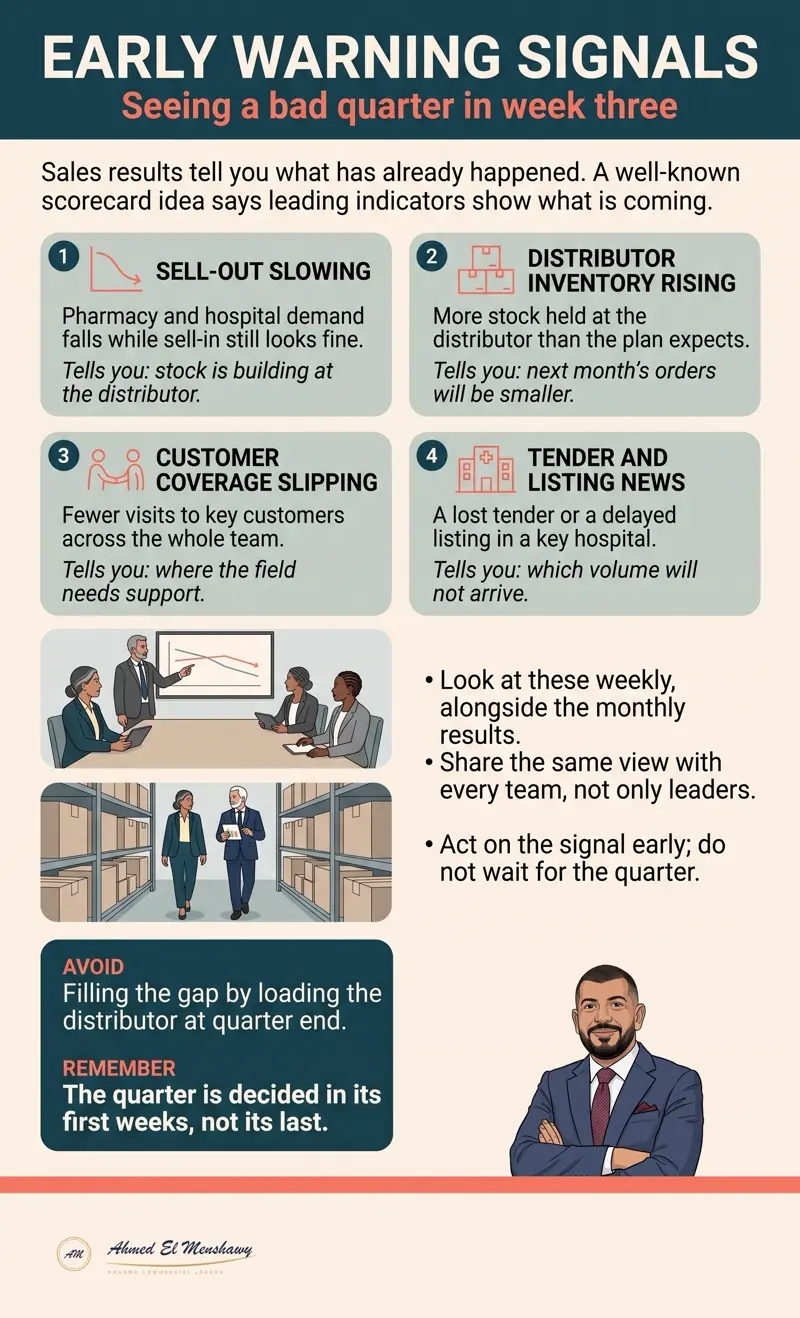
In markets I have worked in, four signals have warned me earliest:
Sell-out slowing. Pharmacy and hospital demand falls while sell-in still looks healthy. That gap is stock building up at the distributor.
Distributor inventory rising. More stock sitting at the distributor than the plan expects means smaller orders next month.
Customer coverage slipping. Fewer visits to key customers across the team. Not a reason to blame anyone, a reason to ask where the field needs support.
Tender and listing news. A lost tender or a delayed listing in a key hospital is volume that will not arrive.
I look at these weekly, and the same view goes to every team, not only the leadership team.
And when a signal turns, the answer is never to push stock into the distributor at quarter end. That only moves the problem into the next quarter.
“The quarter is decided in its first weeks, not its last.”
Lesson 9 of 10 in Step 8: Execution and the operating rhythm, with the full guide and a checklist for this week.