When a distributor or a pharmacy chain asks for better terms, there are two easy answers.
Lower the price. Or add goods.
They can look similar on a spreadsheet. They behave very differently over time.
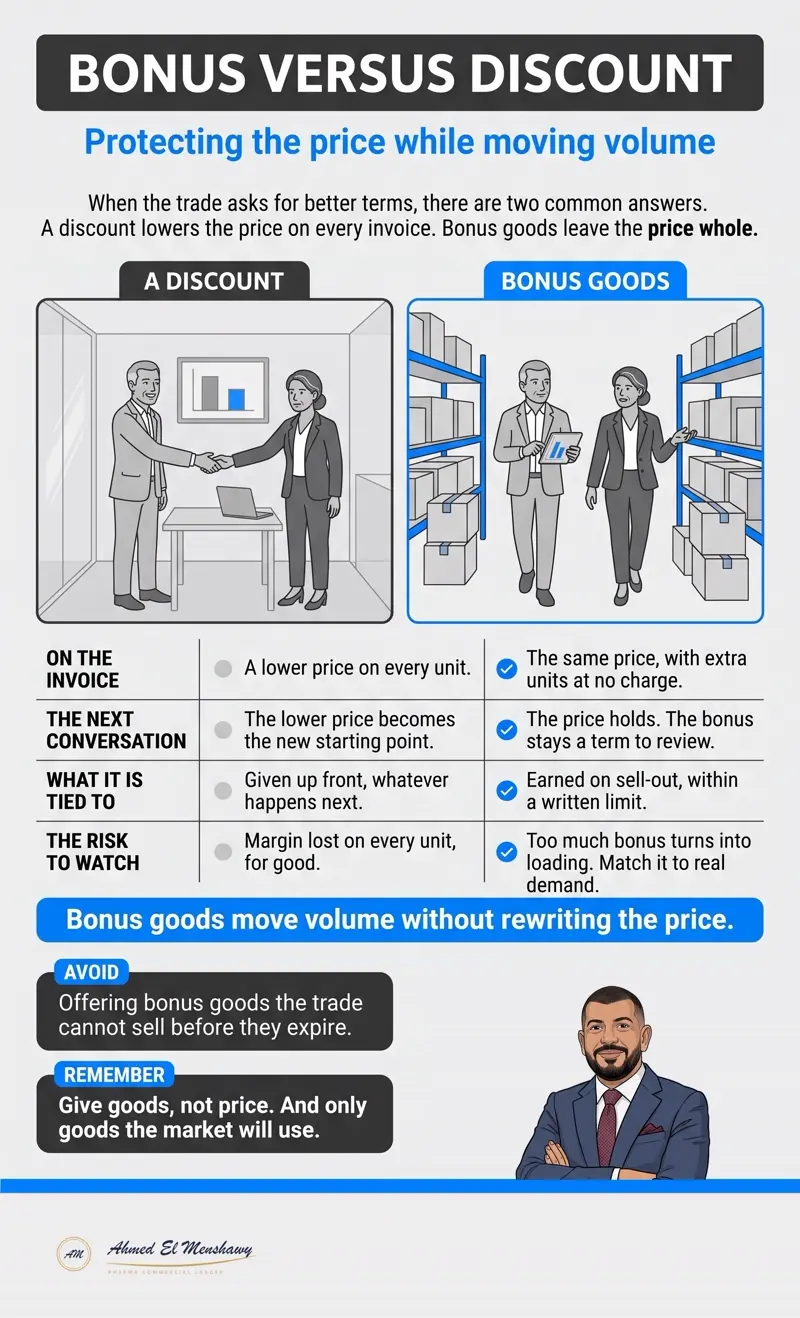
A discount lowers the price on every unit, on every invoice. It is given up front, whatever happens next. And once a customer has seen a lower price, that becomes the starting point for the next conversation, and often for other customers too.
Bonus goods leave the price whole. The customer receives extra units at no charge, and the bonus stays a term that can be reviewed, reduced or ended. The price itself is not rewritten.
In my experience, that is why bonus is the right lever for the trade, and a price cut is not.
But bonus has its own trap. Give more than the market can use and it turns into loading: stock that sits at the distributor, ages on the shelf and comes back as a problem later.
- So the rules I hold to are simple.
- Tie bonus to sell-out, not to what the distributor buys.
- Agree a written limit.
- Never offer goods the trade cannot sell before they expire.
“Give goods, not price. And only goods the market will use.”
Lesson 8 of 17 in Step 3: Money, pricing and forecast, with the full guide and a checklist for this week.