In the Gulf, a country manager does not set the public price of a medicine. The health authority does.
So where does margin get decided?
In the choices we do control. Discounts. Rebates. Bonus goods. Tender bids. Each one is a pricing decision, even when it does not feel like one.
In markets I have worked in, I have seen two ways of running those choices.
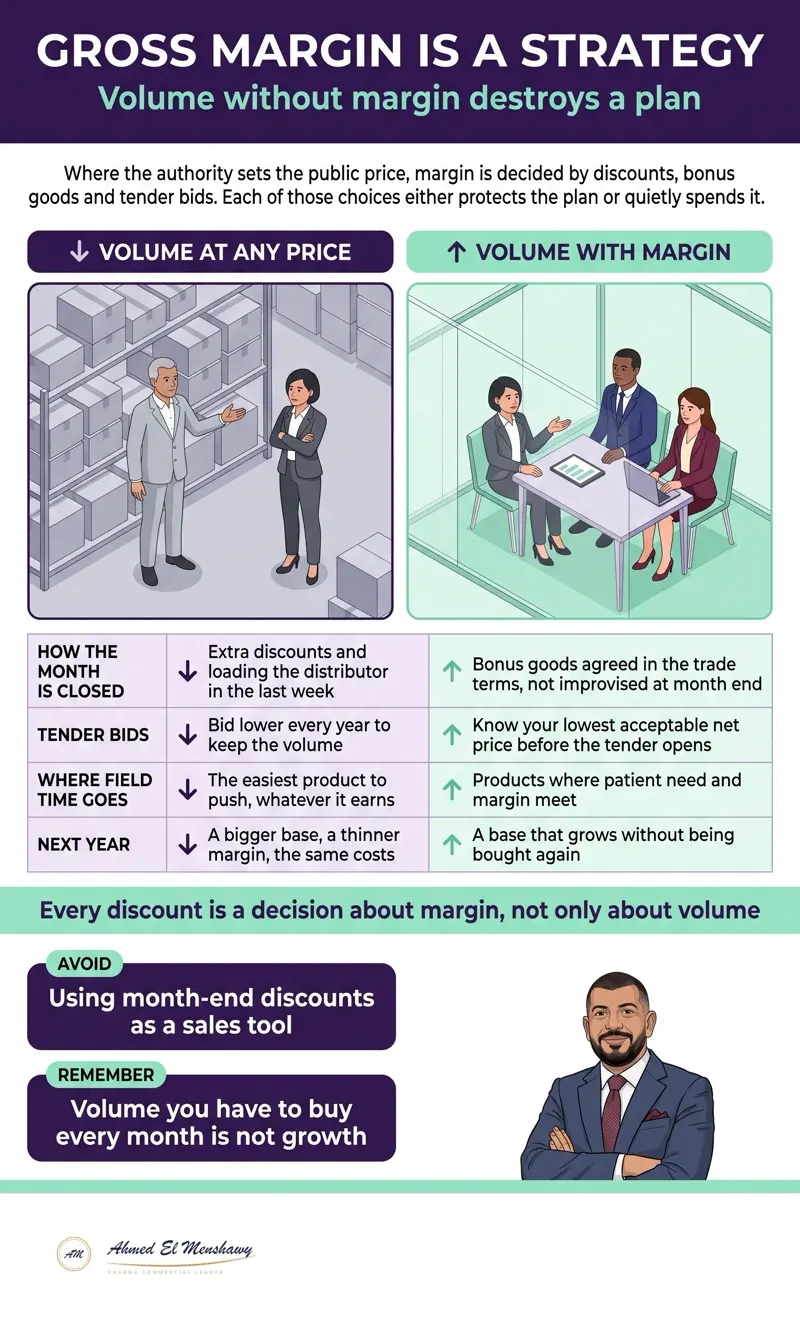
The first chases volume at any price. Extra discounts in the last week of the month. Stock pushed into the distributor to close the number. Tender bids a little lower every year to keep the business. It looks like growth. Next year you have a bigger base, a thinner margin and the same costs, and you have to buy the volume all over again.
The second treats margin as part of the strategy. Bonus goods are agreed in the trade terms, not improvised at month end. The lowest acceptable net price is known before the tender opens. Field time goes to products where patient need and margin meet.
It is slower to show. It is also the only version that still works in year three.
Every discount is a decision about margin, not only about volume.
“Volume you have to buy every month is not growth.”
Lesson 3 of 17 in Step 3: Money, pricing and forecast, with the full guide and a checklist for this week.