The price decisions I have seen go wrong were rarely real decisions.
They were reactions.
In the Gulf, the public price of a medicine is set by the health authority. What a country manager controls is net price: discounts, rebates, bonus goods and tender bids. And net price is usually decided under pressure.
A competitor announces a discount. A distributor wants better terms before a large order. A tender deadline is close. The easiest answer in each case is "fine, a little more."
The trouble is that each "little more" becomes the starting point for the next conversation. One customer's exception quietly becomes every customer's expectation.
In markets I have worked in, the answer has been to decide before the pressure arrives.
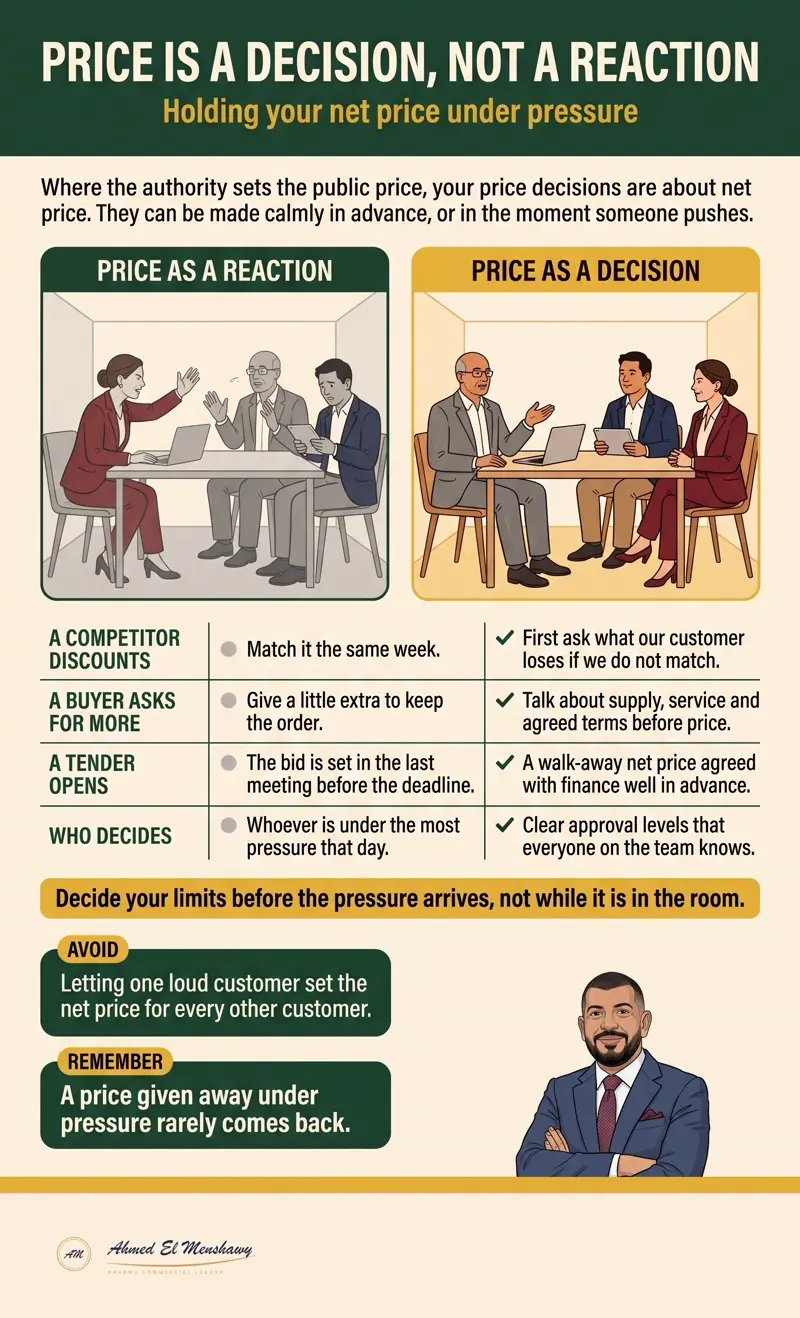
- Know the walk-away net price for each key tender, agreed with finance well in advance.
- When a competitor discounts, ask first what our customer actually loses if we do not match.
- When a buyer asks for more, talk about supply, service and the terms already agreed before touching price.
- Make approval levels clear, so the decision does not fall to whoever is under the most pressure that day.
None of this makes you inflexible. It means that when you do move, it is a choice you can explain.
“A price given away under pressure rarely comes back.”
Lesson 7 of 17 in Step 3: Money, pricing and forecast, with the full guide and a checklist for this week.