Ask most teams what a symposium cost and they will quote the venue invoice.
That is only part of it.
There is travel. Speaker fees, at fair market value. The hours of everyone who planned it and attended it. The field days that did not happen that week.
The same is true of a call and a sample. The full cost is always bigger than the line in the budget.
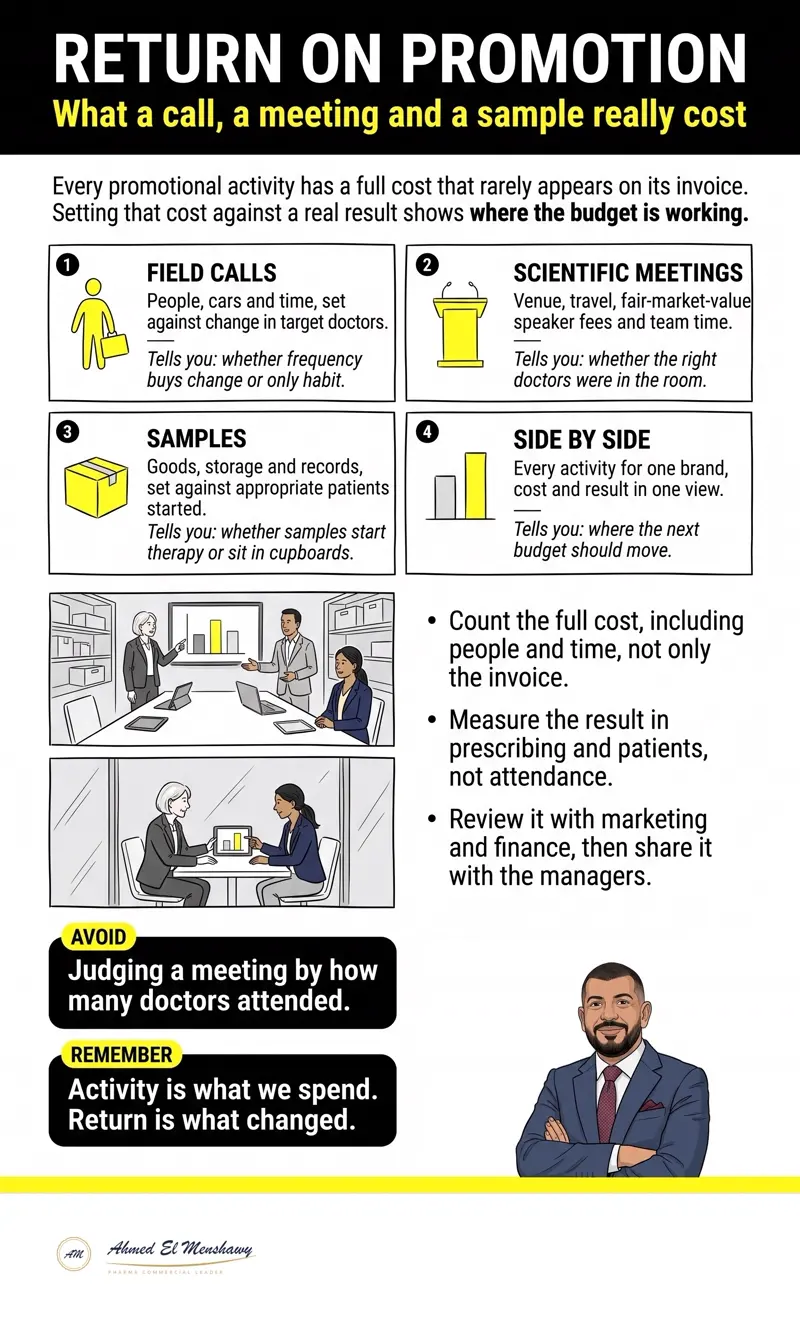
In my teams, we look at four things.
Field calls. People, cars and time, set against change in the doctors we target. Is frequency buying change, or only habit?
Scientific meetings. The full cost, set against one question: were the right doctors in the room?
Samples. Goods, storage and records, set against appropriate patients started. Samples that sit in a cupboard are a cost with no return.
Then all of it side by side, for one brand. That view usually tells you where the next budget should move.
Two rules keep this honest. Measure the result in prescribing and patients, not in attendance. And every activity stays inside the code of practice. A return that needs a grey area is not a return.
We review it with marketing and finance, then share it with the managers who run the activities.
“Activity is what we spend. Return is what changed.”
Lesson 10 of 17 in Step 3: Money, pricing and forecast, with the full guide and a checklist for this week.