Some of the best-looking months I have seen were the worst months for the business.
The sales line jumped. Everyone felt good. And the market had not moved at all.
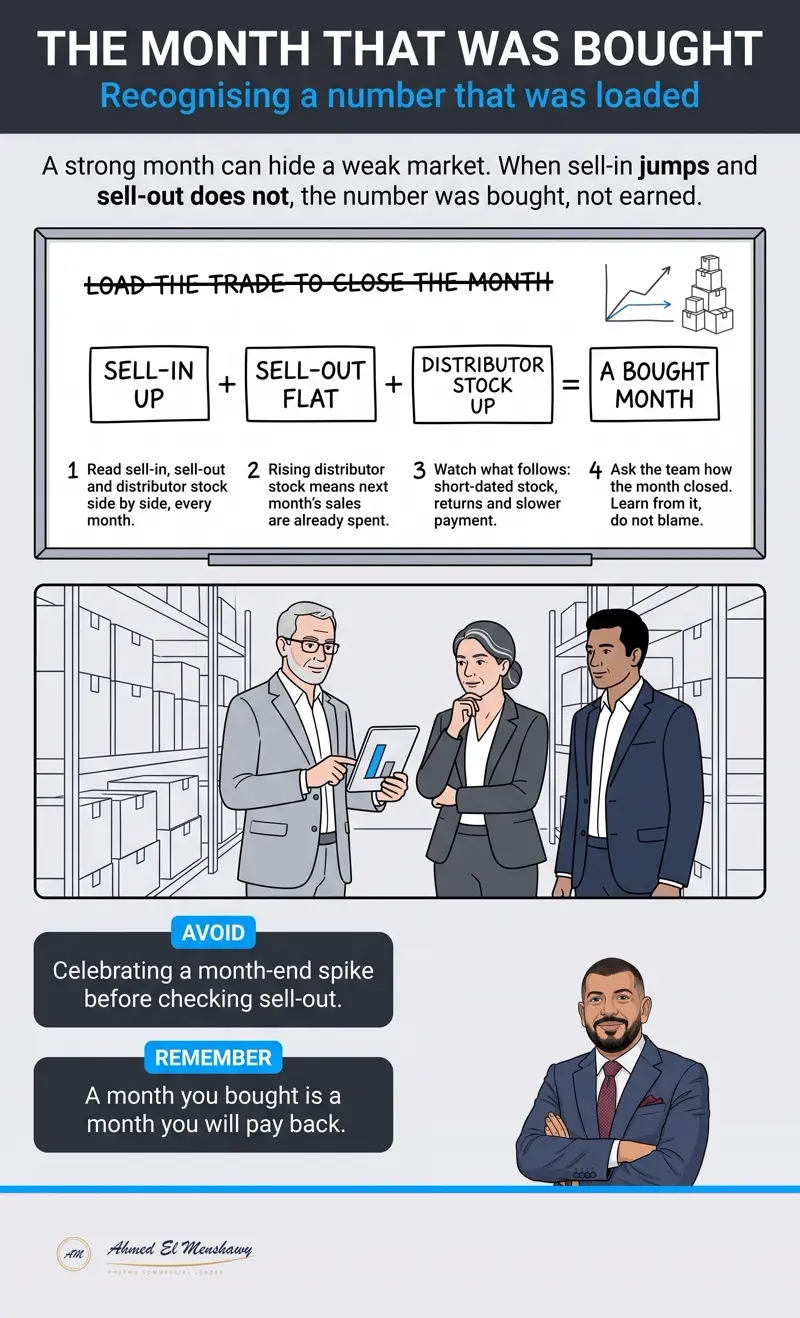
In my experience, a month like that is usually bought, not earned. Stock was pushed into the distributor to close a gap, and the pharmacies and hospitals took no more than they did the month before.
The pattern is easy to see if you look for it.
Sell-in up. Sell-out flat. Distributor stock up.
Three different numbers, telling one story. The stock that went in this month is next month's sales, already spent. Then come the quieter costs: short-dated stock, returns, and payments that slow down.
So in my teams we read the three numbers side by side, every month, together.
And when a month does look bought, the conversation is about learning, not blame. How did it close? What pressure made it feel necessary? What would we do differently next time?
Loading the trade never solves a gap. It only moves it forward, and makes it bigger.
“A month you bought is a month you will pay back.”
Lesson 13 of 17 in Step 3: Money, pricing and forecast, with the full guide and a checklist for this week.