Most A&P budgets I have seen were built the same way.
Take last year. Add a little. Argue about the extra.
It is quick, and it avoids difficult conversations. It also means that an activity which stopped working years ago is still funded, simply because it was funded before.
Zero-based budgeting turns the question around. Nothing is funded by default. Every activity has to explain why it is there.
This is how I use it with my teams.
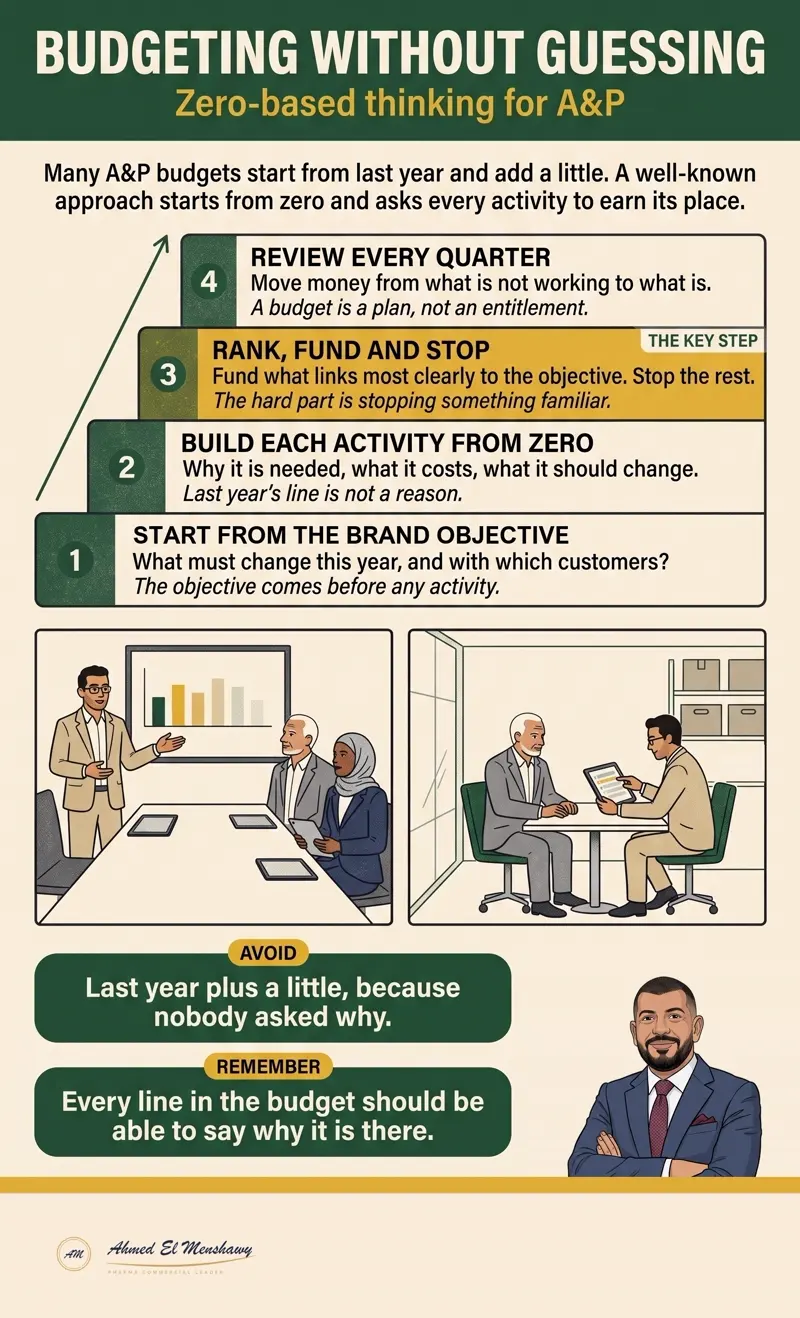
First, the brand objective. What must change this year, and with which customers? Nothing gets money before that is clear.
Then each activity is built from zero. Why is it needed, what does it cost, and what should it change?
Then the step that matters most: rank, fund and stop. The activities that link most clearly to the objective get the money. The rest stop. This is where it gets uncomfortable, because the activities that stop are usually the familiar ones.
Finally, a review every quarter. Money moves from what is not working to what is.
It takes longer the first year. After that, the team starts arriving with better reasons, because they know the question is coming.
“Every line in the budget should be able to say why it is there.”
Lesson 12 of 17 in Step 3: Money, pricing and forecast, with the full guide and a checklist for this week.