Trade terms rarely go wrong in one big decision.
They leak.
A rebate agreed for a launch is still being paid years later. A bonus term meant to support sell-out ends up rewarding stock the distributor bought and never moved. A verbal "we will look after you" becomes an expectation nobody wrote down.
None of it looks dramatic in any single month. Added up, it is margin the business never actually decided to give away.
In my teams, five habits keep trade terms under control.
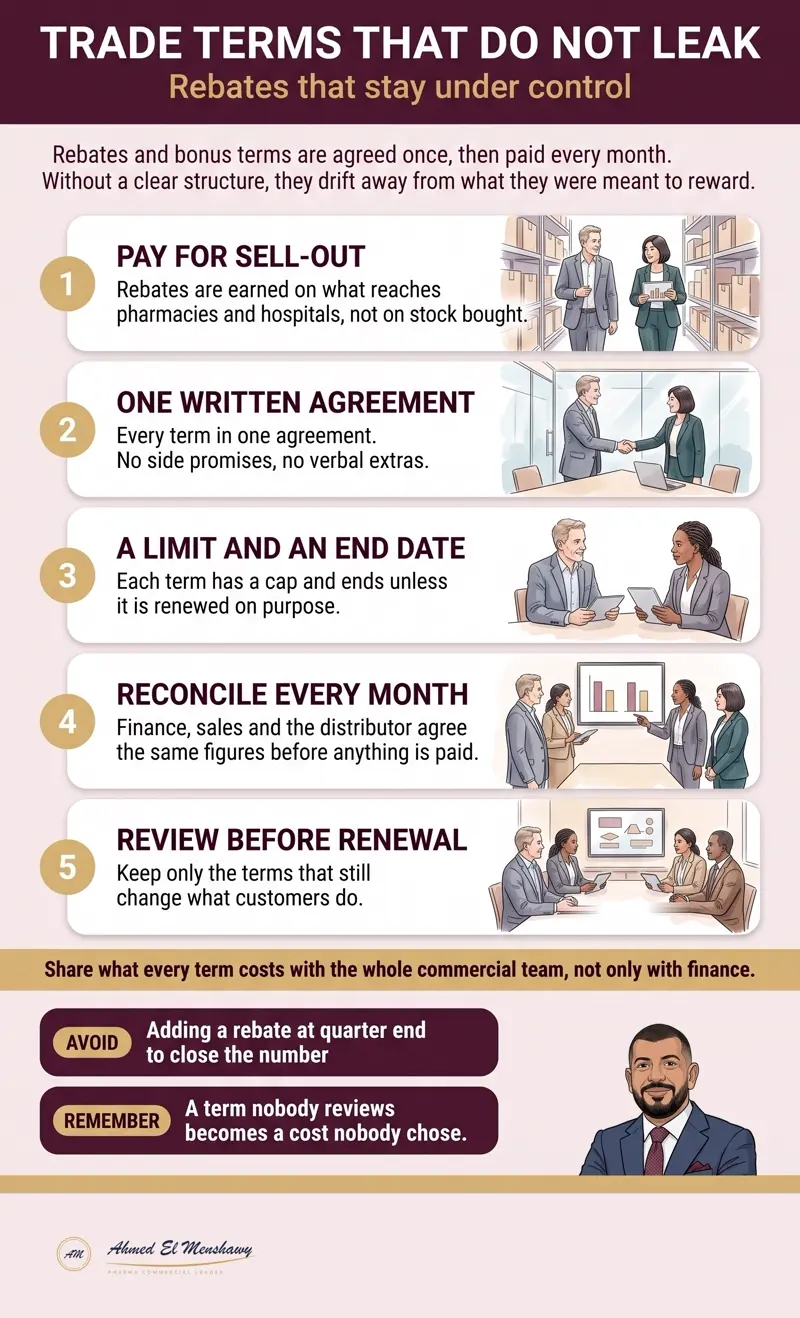
Pay for sell-out. Rebates are earned on what reaches pharmacies and hospitals, not on what the distributor buys.
One written agreement. Every term in one place. No side promises.
A limit and an end date. Each term has a cap and ends unless someone renews it on purpose.
Reconcile every month. Finance, sales and the distributor agree the same figures before anything is paid.
Review before renewal. If a term no longer changes what customers do, it is simply a cost.
One more thing that helped: sharing what each term costs with the whole commercial team, not only with finance. When first-line managers understand the terms, they sell with them in mind.
“A term nobody reviews becomes a cost nobody chose.”
Lesson 9 of 17 in Step 3: Money, pricing and forecast, with the full guide and a checklist for this week.