Working capital sounds like a finance topic.
In pharma, most of it is created by commercial decisions.
Stock that sits unsold at the distributor slows the payment behind it. An unpaid invoice is money the business has earned and cannot use. Neither shows up as a problem on the sales line. Both show up later.
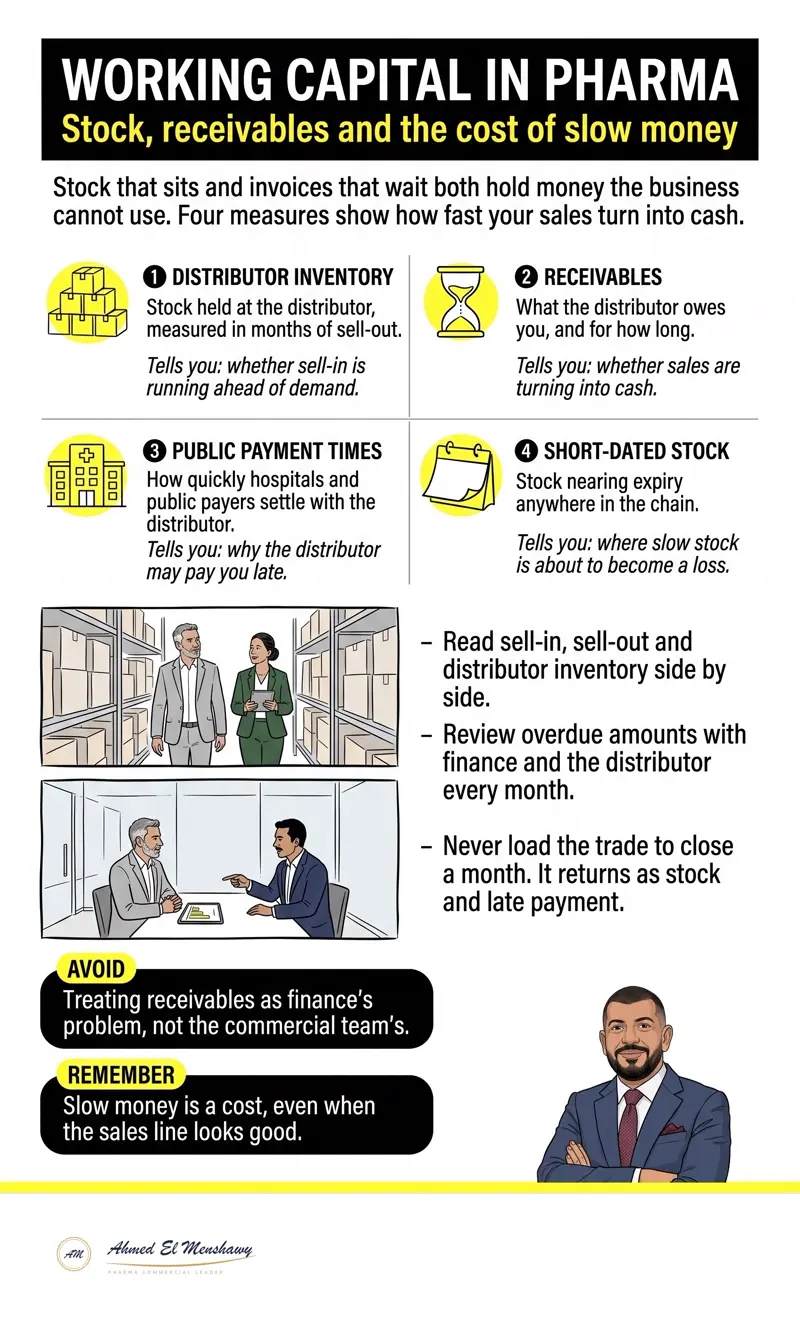
These are the four measures I watch.
Distributor inventory. Stock at the distributor, in months of sell-out. If it keeps rising, sell-in is running ahead of demand.
Receivables. What the distributor owes us, and for how long. This is where sales turn into cash, or do not.
Public payment times. How quickly hospitals and public payers settle with the distributor. When they slow down, the distributor often slows down too.
Short-dated stock. Anything nearing expiry, anywhere in the chain. Slow stock becomes a loss very quietly.
The habit that matters most: read sell-in, sell-out and distributor inventory side by side. Three different numbers, one story.
And the rule I hold to: never load the trade to close a month. It comes back as excess stock and late payment, usually both.
“Slow money is a cost, even when the sales line looks good.”
Lesson 4 of 17 in Step 3: Money, pricing and forecast, with the full guide and a checklist for this week.