The Pharma Career Ladder · The first-line manager · Step 4: Coaching · Lesson 11

Modelling the call yourself

When to show it and when to stay quiet

By Ahmed El Menshawy · 20 years in pharma, from medical rep to country manager in the UAE. Founder of RepPharma. LinkedIn
Published

Most managers I have worked with were promoted because they were good in front of doctors.

So on a double visit, the temptation is obvious. Show the rep how it is done.

Sometimes that is exactly right. A rep who has never seen a good opening cannot build one from a debrief. But I have also seen a manager take over a call and leave the doctor with one clear message: the rep is not the person to talk to.

How I use modelling now:

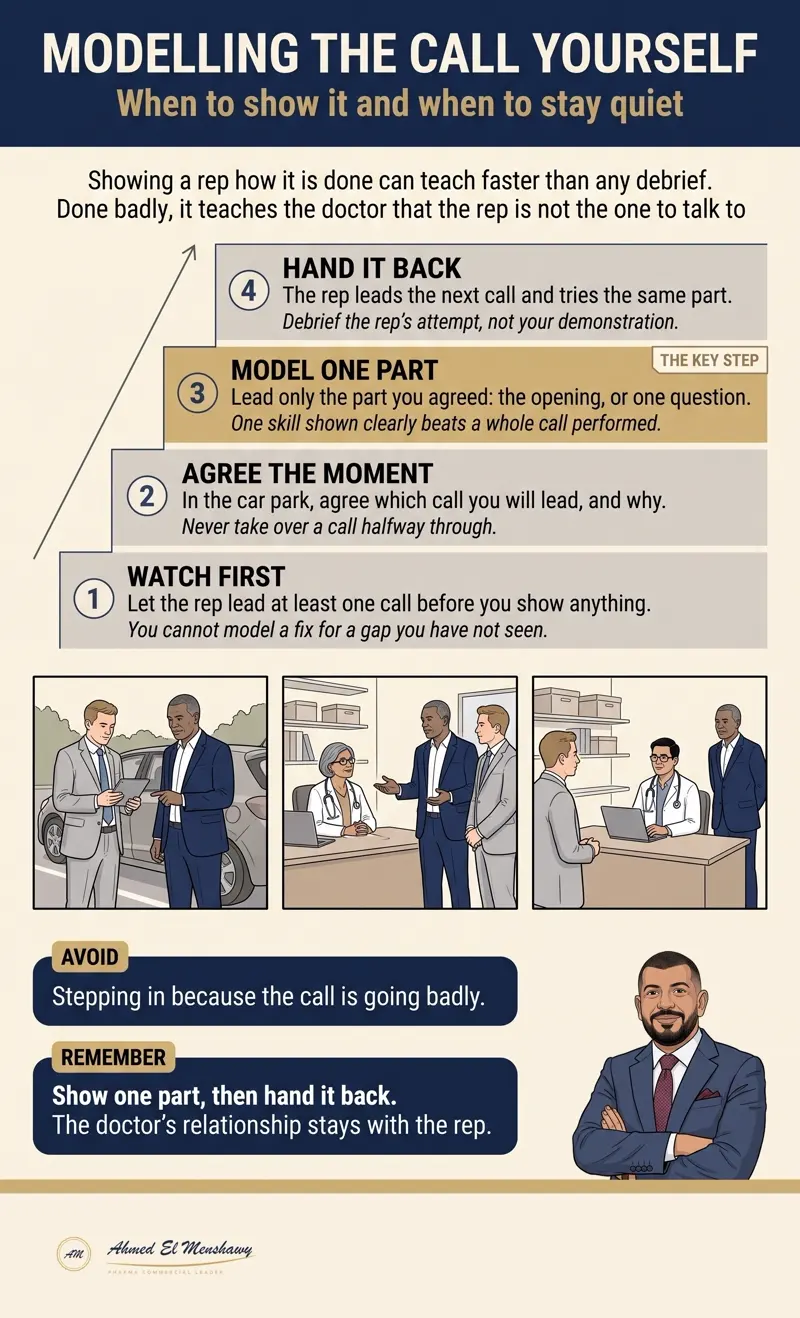
Watch first. Let the rep lead at least one call before showing anything. You cannot model a fix for a gap you have not seen.

Agree the moment in the car park. Which call I will lead, and why. Never halfway through a call.

Model one part only. The opening, or one question. Not a whole performance.

Hand it back. The rep leads the next call and tries the same part. We debrief their attempt, not mine.

The one thing I avoid: stepping in because a call is going badly. That rescues the call and costs the rep their standing with that doctor.

“Show one part, then hand it back. The doctor's relationship stays with the rep.”
Modelling the call yourself: When to show it and when to stay quiet

Lesson 11 of 23 in Step 4: Coaching, with the full guide and a checklist for this week.

More lessons in step 4: Coaching

Lesson 1The 10-minute debriefUsing the GROW model in the car after a doctor callLesson 2Ask before you tellWhy the rep who finds the answer keeps itLesson 3One skill at a timeWhy a double visit needs a single focusLesson 4Feedback that changes behaviourSituation, behaviour, impact after a double visitLesson 5Praise that means somethingSpecific, timely and namedLesson 6The coaching logOne line per call, patterns over a monthLesson 7Coaching a strong repStretch, not correctionLesson 8Coaching a struggling repDiagnose skill or will before you actLesson 9When the rep does not want coachingResistance is informationLesson 10Coaching by phoneWhen you cannot be in the field togetherLesson 12The development plan that is usedOne page, one skill, one dateLesson 13Coaching the openingThe thirty seconds most worth fixingLesson 14Coaching questioningTeaching a rep to stop pitchingLesson 15Coaching objection handlingRehearsal beats adviceLesson 16Role play without humiliationMaking practice safe and usefulLesson 17The seven-day follow-upCoaching without follow-up is only a conversationLesson 18Coaching across a cycleWhat to work on in month one, two and threeLesson 19Group coaching in a cycle meetingTeaching twelve reps without boring tenLesson 20Measuring whether coaching workedBehaviour seen on calls, not sessions heldLesson 21Coaching yourselfReviewing your own day as honestly as a rep's callLesson 22The coaching conversation nobody wantsWhen the issue is attitude, not abilityLesson 23Building a coaching habitSame day, same rhythm, every cycle

Coaching, in RepPharma

Plans approved in one click

Each rep’s monthly plan is drafted from doctor priority and visit frequency; you review and approve it in one click.

Team reviews that assemble themselves

Monthly team reviews are built from field data, and a month-end checklist shows which reps have next month’s plan, forecast and expenses in.

Forecasts graded against real sales

Bottom-up forecasts per account and product are graded against real sales every month.

A new step every week in the Pharma Career Ladder newsletter on LinkedIn.